Buy brenton.eu ?
We are moving the project
brenton.eu .
Are you interested in purchasing the domain
brenton.eu ?
domain@kv-gmbh.de · 0541-91531010
Buy brenton.eu ?
What is agnosticism?
Agnosticism is the belief that the existence of God or a higher power is unknown or unknowable. Agnostics do not claim to have definitive knowledge about the existence or non-existence of a deity, and they often take a skeptical or neutral stance on the topic of religion. Agnosticism is different from atheism, which asserts that there is no God, and from theism, which asserts that there is a God. **
Is agnosticism neutral or not?
Agnosticism is often considered neutral because it is the belief that the existence of a higher power or ultimate truth is unknown or unknowable. Agnostics do not claim to have knowledge or certainty about the existence of a deity or spiritual realm, which can be seen as a neutral stance. However, some argue that agnosticism is not entirely neutral as it implies a skepticism or doubt towards religious claims and can be seen as a rejection of absolute certainty in favor of open-mindedness and critical thinking. Ultimately, whether agnosticism is considered neutral or not may depend on individual perspectives and interpretations. **

Similar search terms for Agnosticism
Top-Angebote
Products related to Agnosticism:
-
SAFAVIEH Watkins 47.2-Inch Wood Minimalist Desk, White, Scandinavian"Watkins Minimalist Desk: suspended storage unit, smooth MDF surface and x-frame trestle base The Watkins Minimalist Desk is a Scandinavian minimalist desk in white. This wood minimalist desk measures 47.2"" W x 21.6"" D x 29.5"" H."156,71 $*Shipping: 0,00 $Secure redirect to the provider
-
Fusion Finds Scandinavian Shell Wall Mirror Coastal Wooden Decorative Mirror For Beach House & Bedroom Wall Decor Scandinavian Shell Wall Mirror Coastal Wooden Decorative Mirror For Beach House & Bedroom Wall DecorA beautiful home should feel calm, inviting, and uniquely yours. This coastal wall mirror blends Scandinavian simplicity with charming shellinspired details to create a stylish accent for bedrooms, living rooms, nurseries, and beachthemed spaces....53,97 $*Shipping: 0,00 $Secure redirect to the provider
-
SAFAVIEH Melody Ailsa Modern Scandinavian RugBrimming with minimalist Modern charm, the Melody Collection of area rugs explores plush, textured patterns in trendy, versatile hues. Made from easy-care polyester fibers, these rugs are virtually non-shedding for convenient upkeep.65,52 $*Shipping: 0,00 $Secure redirect to the provider
-
Uplift Essentials Wooden Dolphin Underwater Sign Minimalist 2D Coastal Wall Plaque For Modern Bedrooms & Cafes Wooden Dolphin Underwater Sign Minimalist 2D Coastal Wall Plaque For Modern Bedrooms & Cafes"Synchronize your sanctuary with the highdefinition, organic energy of our 8Inch Dolphin Underwater Theme Sign. Featuring a sophisticated ""oceanicluxe"" silhouette of leaping dolphins, this 2D masterpiece is designed to bring a ""sereneminimalist""..."34,97 $*Shipping: 0,00 $Secure redirect to the provider




-
What is agnosticism in your own words?
Agnosticism is the belief that the existence of God or a higher power cannot be known or proven. Agnostics do not claim to have knowledge or certainty about the existence of a deity, and they may be open to the possibility of a higher power but do not adhere to any specific religious beliefs. Agnosticism is often characterized by a skepticism towards religious claims and a focus on the limitations of human understanding when it comes to matters of the divine. **
-
What is the difference between agnosticism and atheism?
Agnosticism is the belief that the existence of a higher power or deity is unknown or unknowable. Agnostics do not claim to know whether a god or gods exist or not. Atheism, on the other hand, is the lack of belief in the existence of any deities. Atheists do not believe in the existence of any gods or higher powers. While agnostics are unsure or skeptical about the existence of a higher power, atheists outright reject the belief in any deity. **
-
How can one transition from Islam to agnosticism?
Transitioning from Islam to agnosticism can be a deeply personal and complex journey. It may involve questioning and reevaluating one's beliefs, seeking out different perspectives and information, and engaging in introspection and self-reflection. It can also involve finding support from others who have gone through similar experiences and exploring different spiritual or philosophical paths. Ultimately, the transition to agnosticism may involve embracing uncertainty and being open to the idea that there may not be definitive answers to questions about the existence of a higher power or the nature of the universe. **
-
What is the difference between atheism and agnosticism?
Atheism is the belief that there is no god or gods, while agnosticism is the belief that the existence of god or gods is unknown or unknowable. Atheists actively deny the existence of a higher power, while agnostics simply claim that the existence of a higher power cannot be proven or disproven. In other words, atheism is a belief in the absence of a god, while agnosticism is a lack of belief in the presence or absence of a god. **


What religions are there, such as Christianity, Islam, Agnosticism, etc.?
There are many religions practiced around the world, including Christianity, Islam, Hinduism, Buddhism, Judaism, Sikhism, and many others. Additionally, there are belief systems such as agnosticism, atheism, and secular humanism that do not adhere to a specific religious tradition. Each of these religions and belief systems has its own unique set of beliefs, practices, and traditions. **
What are some problematic questions related to atheism and agnosticism?
Some problematic questions related to atheism and agnosticism include: 1. "How can you be moral without belief in a higher power?" This question assumes that morality is dependent on religious belief, which is not necessarily the case. 2. "Why don't you believe in God?" This question can be seen as confrontational and may put atheists and agnostics on the defensive. 3. "Are you just angry at God?" This question assumes that non-belief is rooted in emotion rather than rational thought. 4. "What if you're wrong?" This question can be seen as dismissive of an individual's beliefs and can be perceived as condescending. **
Top-Angebote
Products related to Agnosticism:
-
No Industrial Floating Pipe Wall Mounted Shelves Rustic Modern Wood ShelvingFunctional Storage Shelves:The pipes hold together five solid boards.There can be a variety of ways to set up, you could put them in a straight configuration or angled for a corner shelf.203,41 $*Shipping: 0,00 $Secure redirect to the provider
-
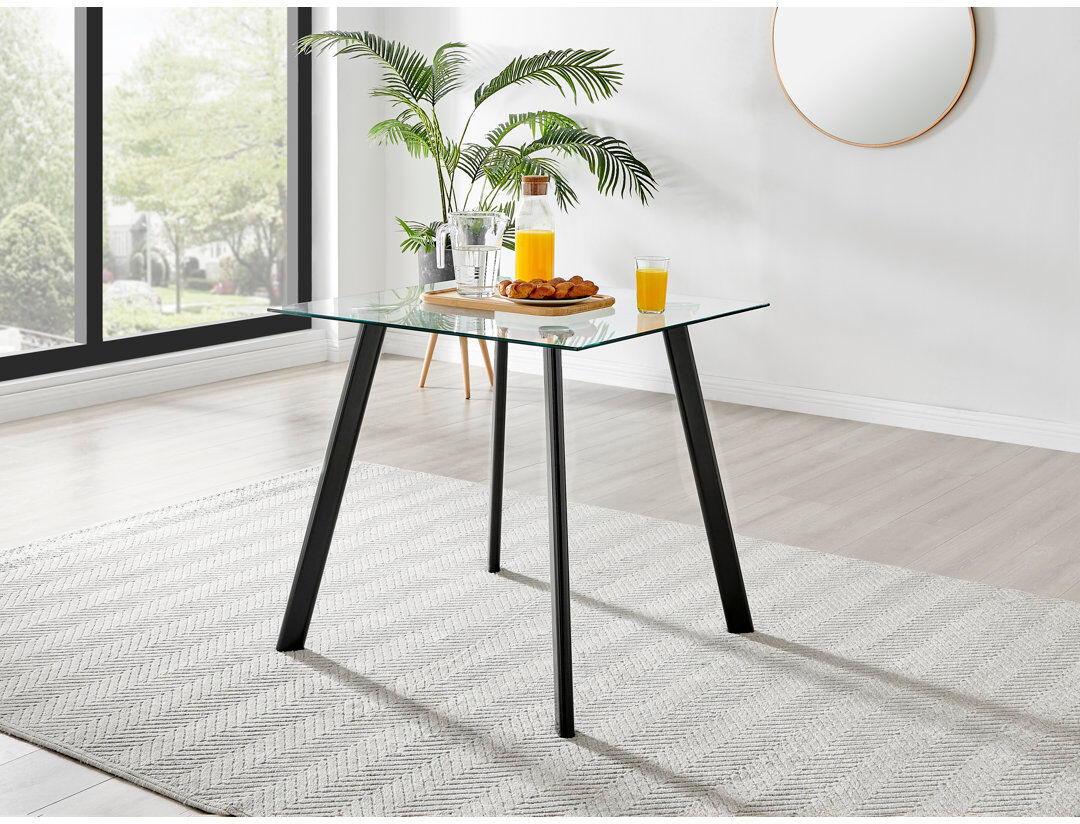
Canora Grey Scandinavian Style Glass and Metal Leg Square Dining Table - Modern Minimalist Design BlackOur Seattle square glass dining table features simple and effortless clear glass and black tapered metal legs, perfect for modern homes. This dinner table has a 8mm thick tempered glass tabletop sat on four round tapered black powder-coated metal legs. It will comfortably seat 4 so perfect for family dinners or for entertaining guests. This design is all about keeping things unfussy and light with that minimalist Industrial look and laid-back Scandinavian touch. This beautifully designed dining table will set the scene for a stylish and contemporary dining room. Want to complete the look? Shop our range of on-trend dining room furniture and gorgeous dining chairs! Canora Grey Table Base Colour: Black98,00 £*Shipping: 0,00 £Secure redirect to the provider
-
SAFAVIEH Watkins 47.2-Inch Wood Minimalist Desk, White, Scandinavian"Watkins Minimalist Desk: suspended storage unit, smooth MDF surface and x-frame trestle base The Watkins Minimalist Desk is a Scandinavian minimalist desk in white. This wood minimalist desk measures 47.2"" W x 21.6"" D x 29.5"" H."156,71 $*Shipping: 0,00 $Secure redirect to the provider
-
Fusion Finds Scandinavian Shell Wall Mirror Coastal Wooden Decorative Mirror For Beach House & Bedroom Wall Decor Scandinavian Shell Wall Mirror Coastal Wooden Decorative Mirror For Beach House & Bedroom Wall DecorA beautiful home should feel calm, inviting, and uniquely yours. This coastal wall mirror blends Scandinavian simplicity with charming shellinspired details to create a stylish accent for bedrooms, living rooms, nurseries, and beachthemed spaces....53,97 $*Shipping: 0,00 $Secure redirect to the provider
-
What is agnosticism?
Agnosticism is the belief that the existence of God or a higher power is unknown or unknowable. Agnostics do not claim to have definitive knowledge about the existence or non-existence of a deity, and they often take a skeptical or neutral stance on the topic of religion. Agnosticism is different from atheism, which asserts that there is no God, and from theism, which asserts that there is a God. **
-
Is agnosticism neutral or not?
Agnosticism is often considered neutral because it is the belief that the existence of a higher power or ultimate truth is unknown or unknowable. Agnostics do not claim to have knowledge or certainty about the existence of a deity or spiritual realm, which can be seen as a neutral stance. However, some argue that agnosticism is not entirely neutral as it implies a skepticism or doubt towards religious claims and can be seen as a rejection of absolute certainty in favor of open-mindedness and critical thinking. Ultimately, whether agnosticism is considered neutral or not may depend on individual perspectives and interpretations. **
-
What is agnosticism in your own words?
Agnosticism is the belief that the existence of God or a higher power cannot be known or proven. Agnostics do not claim to have knowledge or certainty about the existence of a deity, and they may be open to the possibility of a higher power but do not adhere to any specific religious beliefs. Agnosticism is often characterized by a skepticism towards religious claims and a focus on the limitations of human understanding when it comes to matters of the divine. **
-
What is the difference between agnosticism and atheism?
Agnosticism is the belief that the existence of a higher power or deity is unknown or unknowable. Agnostics do not claim to know whether a god or gods exist or not. Atheism, on the other hand, is the lack of belief in the existence of any deities. Atheists do not believe in the existence of any gods or higher powers. While agnostics are unsure or skeptical about the existence of a higher power, atheists outright reject the belief in any deity. **
Similar search terms for Agnosticism
-
SAFAVIEH Melody Ailsa Modern Scandinavian RugBrimming with minimalist Modern charm, the Melody Collection of area rugs explores plush, textured patterns in trendy, versatile hues. Made from easy-care polyester fibers, these rugs are virtually non-shedding for convenient upkeep.65,52 $*Shipping: 0,00 $Secure redirect to the provider
-
Uplift Essentials Wooden Dolphin Underwater Sign Minimalist 2D Coastal Wall Plaque For Modern Bedrooms & Cafes Wooden Dolphin Underwater Sign Minimalist 2D Coastal Wall Plaque For Modern Bedrooms & Cafes"Synchronize your sanctuary with the highdefinition, organic energy of our 8Inch Dolphin Underwater Theme Sign. Featuring a sophisticated ""oceanicluxe"" silhouette of leaping dolphins, this 2D masterpiece is designed to bring a ""sereneminimalist""..."34,97 $*Shipping: 0,00 $Secure redirect to the provider
-
Uplift Essentials Atmospheric RGB Corner Floor Lamp Modern Scandinavian Ambient Lighting Atmospheric RGB Corner Floor Lamp Modern Scandinavian Ambient LightingTransform your living space into a sanctuary of style and color. Whether you are looking to set the mood for a relaxing evening, create a vibrant gaming setup, or add a touch of modern elegance to your bedroom, this RGB Floor Lamp is the ultimate...74,97 $*Shipping: 0,00 $Secure redirect to the provider
-
SAFAVIEH Brenton 50 x 60 Inch Cotton Throw, Blue and White"Brenton Throw: woven cotton construction, substantial weight and drape and striped pattern and fringe The Brenton Throw is a bohemian throw in blue / white. This cotton throw measures 50"" W x 60"" L."64,56 $*Shipping: 0,00 $Secure redirect to the provider
-
How can one transition from Islam to agnosticism?
Transitioning from Islam to agnosticism can be a deeply personal and complex journey. It may involve questioning and reevaluating one's beliefs, seeking out different perspectives and information, and engaging in introspection and self-reflection. It can also involve finding support from others who have gone through similar experiences and exploring different spiritual or philosophical paths. Ultimately, the transition to agnosticism may involve embracing uncertainty and being open to the idea that there may not be definitive answers to questions about the existence of a higher power or the nature of the universe. **
-
What is the difference between atheism and agnosticism?
Atheism is the belief that there is no god or gods, while agnosticism is the belief that the existence of god or gods is unknown or unknowable. Atheists actively deny the existence of a higher power, while agnostics simply claim that the existence of a higher power cannot be proven or disproven. In other words, atheism is a belief in the absence of a god, while agnosticism is a lack of belief in the presence or absence of a god. **
-
What religions are there, such as Christianity, Islam, Agnosticism, etc.?
There are many religions practiced around the world, including Christianity, Islam, Hinduism, Buddhism, Judaism, Sikhism, and many others. Additionally, there are belief systems such as agnosticism, atheism, and secular humanism that do not adhere to a specific religious tradition. Each of these religions and belief systems has its own unique set of beliefs, practices, and traditions. **
-
What are some problematic questions related to atheism and agnosticism?
Some problematic questions related to atheism and agnosticism include: 1. "How can you be moral without belief in a higher power?" This question assumes that morality is dependent on religious belief, which is not necessarily the case. 2. "Why don't you believe in God?" This question can be seen as confrontational and may put atheists and agnostics on the defensive. 3. "Are you just angry at God?" This question assumes that non-belief is rooted in emotion rather than rational thought. 4. "What if you're wrong?" This question can be seen as dismissive of an individual's beliefs and can be perceived as condescending. **
* All prices are inclusive of VAT and, if applicable, plus shipping costs. The offer information is based on the details provided by the respective shop and is updated through automated processes. Real-time updates do not occur, so deviations can occur in individual cases. ** Note: Parts of this content were created by AI.