Buy brenton.eu ?
We are moving the project
brenton.eu .
Are you interested in purchasing the domain
brenton.eu ?
domain@kv-gmbh.de · 0541-91531010
Buy brenton.eu ?
Is the pre-industrial era the same as the early modern period?
No, the pre-industrial era and the early modern period are not the same. The pre-industrial era refers to the time before the Industrial Revolution, when societies relied on manual labor and agriculture as the primary means of production. The early modern period, on the other hand, is a specific period in history that is typically considered to span from the late 15th century to the late 18th century, characterized by significant cultural, political, and social changes. While the pre-industrial era falls within the early modern period, they are distinct in terms of their focus and defining characteristics. **
Continuity or Change in the Early Modern Period?
The Early Modern Period, spanning from the 15th to 18th centuries, was characterized by a mix of continuity and change. Continuity was seen in the persistence of feudal social structures, religious beliefs, and traditional forms of governance. However, significant changes also occurred during this period, such as the rise of nation-states, the exploration and colonization of new territories, the Protestant Reformation, and the Scientific Revolution. Overall, the Early Modern Period was a time of transition and transformation, with both elements of continuity and change shaping the era. **


Similar search terms for Early
Top-Angebote
Products related to Early:
-
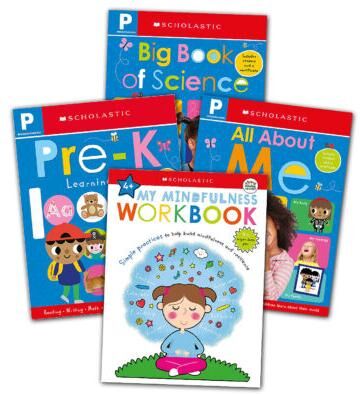
Scholastic Early Learners Pre-K Activity PackScholastic Early Learners is a dedicated learning program that builds school skills from infancy through second grade. Created by experts and focused on reinforcing curriculum topics and current academic guidelines with kid-friendly activities, this...30,56 $*Shipping: 0,00 $Secure redirect to the provider
-
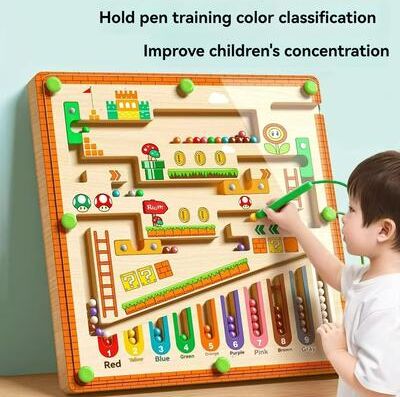
Modern Home Fixes Magnetic Maze Toy For Kids Early Education Puzzle large SizeHelp your little learner build focus, patience, and confidence through playful discovery. This magnetic maze toy guides children as they move the ball through winding paths using a magnetic pen, turning learning time into a fun handson challenge....22,97 $*Shipping: 0,00 $Secure redirect to the provider
-
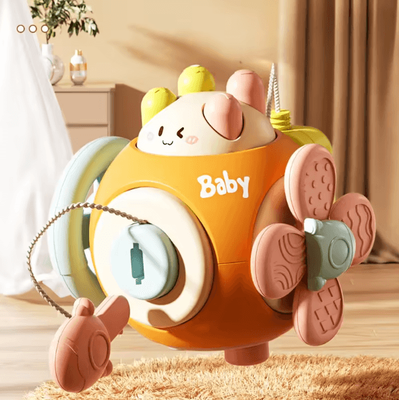
Uplift Curations Montessori Busy Ball Grasping Toy For Early Sensory Development Montessori Busy Ball Grasping Toy For Early Sensory DevelopmentSupport your babys earliest learning moments with a toy designed for discovery and growth. This engaging Montessori busy ball encourages babies to explore, grab, and interacthelping build essential skills through play. Its open, easytohold structure...46,50 $*Shipping: 0,00 $Secure redirect to the provider
-
Early Rider Balance Bike - Bonsai (2-4 Years)The Bonsai brings together the very best thatbirch and aluminium have to offer to satisfy those who love the tactile beauty and heirloom quality of wood, but are into the durability and serviceability of a corrosion free metal.Thehorizontally...159,00 $*Shipping: 0,00 $Secure redirect to the provider

-
What were the gender roles in the Early Modern period?
In the Early Modern period, gender roles were largely defined by traditional expectations and societal norms. Men were typically seen as the primary breadwinners and decision-makers, responsible for providing for their families and holding positions of authority in society. Women, on the other hand, were expected to focus on domestic duties, such as caring for the household and children. They had limited opportunities for education and employment outside the home, and their social status was often tied to their roles as wives and mothers. Overall, gender roles were highly stratified and reinforced by cultural and religious beliefs of the time. **
-
What did the early modern state look like in Germany?
The early modern state in Germany was characterized by a fragmented political landscape, with over 300 independent states known as principalities, duchies, and free cities. These states were ruled by various monarchs, princes, and city councils, each with their own laws, currencies, and armies. The Holy Roman Empire, a loose confederation of states, provided a nominal overarching authority, but real power was decentralized. This decentralized structure led to frequent conflicts and shifting alliances among the states, contributing to a lack of centralized authority in Germany during this period. **
-
Which modern and contemporary artists paint in the early period?
Some modern and contemporary artists who paint in the early period style include Eric Fischl, David Hockney, and Neo Rauch. These artists draw inspiration from the techniques and aesthetics of early periods in art history, such as the Renaissance or Baroque periods, but infuse their work with a contemporary twist. Their paintings often feature realistic figures and settings, rich colors, and a strong sense of narrative or emotion, reminiscent of the early period styles they admire. **
-
What did the early modern state in Germany look like?
The early modern state in Germany was characterized by a patchwork of independent territories, each ruled by its own prince or noble. These territories were often part of larger entities such as the Holy Roman Empire, but they maintained a significant degree of autonomy. The central authority of the Holy Roman Emperor was weak, and the various territories had their own laws, currencies, and administrative systems. This decentralized political structure contributed to a fragmented and often unstable political landscape in early modern Germany. **


Can you provide a summary of the Early Modern period?
The Early Modern period, which lasted from the late 15th century to the late 18th century, was a time of significant social, political, and cultural change. It saw the rise of nation-states, the expansion of global trade and exploration, and the emergence of new scientific and philosophical ideas. This period also witnessed the Protestant Reformation, the Renaissance, and the Enlightenment, all of which had a profound impact on the development of Western civilization. It was a time of great innovation and upheaval, laying the groundwork for the modern world as we know it. **
What are the differences between Old Europe and Early Modern Era?
Old Europe refers to the period from around 3000 BCE to 500 BCE, characterized by the development of early civilizations such as the Minoans, Mycenaeans, and ancient Greeks. This period saw the rise of city-states, the development of writing systems, and the establishment of complex social structures. In contrast, the Early Modern Era, which began around the 16th century, was marked by significant changes in Europe, including the Renaissance, the Age of Exploration, the Protestant Reformation, and the rise of nation-states. This era saw advancements in science, technology, and the arts, as well as the beginning of global trade and colonization. Overall, the differences between Old Europe and the Early Modern Era lie in the significant social, political, and cultural changes that occurred during these periods. **
Top-Angebote
Products related to Early:
-
Early Rider Super Velio Ride OnThe Velio is a huge leap forward in the early development of children between 10 and 24 months.Uniquely engineered to provide next level support as our children are challenged to develop their strength, balance, coordination skills.Its the first...199,00 $*Shipping: 0,00 $Secure redirect to the provider
-
Early Rider Bella Velio Ride On - BlackThe Velio is a huge step forward in the development of children between 10 and 24 months.As with our Super model, the Bella is uniquely engineered to provide next level support as our children are challenged to develop their strength, balance, co...199,00 $*Shipping: 0,00 $Secure redirect to the provider
-
Scholastic Early Learners Pre-K Activity PackScholastic Early Learners is a dedicated learning program that builds school skills from infancy through second grade. Created by experts and focused on reinforcing curriculum topics and current academic guidelines with kid-friendly activities, this...30,56 $*Shipping: 0,00 $Secure redirect to the provider
-
Modern Home Fixes Magnetic Maze Toy For Kids Early Education Puzzle large SizeHelp your little learner build focus, patience, and confidence through playful discovery. This magnetic maze toy guides children as they move the ball through winding paths using a magnetic pen, turning learning time into a fun handson challenge....22,97 $*Shipping: 0,00 $Secure redirect to the provider
-
Is the pre-industrial era the same as the early modern period?
No, the pre-industrial era and the early modern period are not the same. The pre-industrial era refers to the time before the Industrial Revolution, when societies relied on manual labor and agriculture as the primary means of production. The early modern period, on the other hand, is a specific period in history that is typically considered to span from the late 15th century to the late 18th century, characterized by significant cultural, political, and social changes. While the pre-industrial era falls within the early modern period, they are distinct in terms of their focus and defining characteristics. **
-
Continuity or Change in the Early Modern Period?
The Early Modern Period, spanning from the 15th to 18th centuries, was characterized by a mix of continuity and change. Continuity was seen in the persistence of feudal social structures, religious beliefs, and traditional forms of governance. However, significant changes also occurred during this period, such as the rise of nation-states, the exploration and colonization of new territories, the Protestant Reformation, and the Scientific Revolution. Overall, the Early Modern Period was a time of transition and transformation, with both elements of continuity and change shaping the era. **
-
What were the gender roles in the Early Modern period?
In the Early Modern period, gender roles were largely defined by traditional expectations and societal norms. Men were typically seen as the primary breadwinners and decision-makers, responsible for providing for their families and holding positions of authority in society. Women, on the other hand, were expected to focus on domestic duties, such as caring for the household and children. They had limited opportunities for education and employment outside the home, and their social status was often tied to their roles as wives and mothers. Overall, gender roles were highly stratified and reinforced by cultural and religious beliefs of the time. **
-
What did the early modern state look like in Germany?
The early modern state in Germany was characterized by a fragmented political landscape, with over 300 independent states known as principalities, duchies, and free cities. These states were ruled by various monarchs, princes, and city councils, each with their own laws, currencies, and armies. The Holy Roman Empire, a loose confederation of states, provided a nominal overarching authority, but real power was decentralized. This decentralized structure led to frequent conflicts and shifting alliances among the states, contributing to a lack of centralized authority in Germany during this period. **
Similar search terms for Early
-
Uplift Curations Montessori Busy Ball Grasping Toy For Early Sensory Development Montessori Busy Ball Grasping Toy For Early Sensory DevelopmentSupport your babys earliest learning moments with a toy designed for discovery and growth. This engaging Montessori busy ball encourages babies to explore, grab, and interacthelping build essential skills through play. Its open, easytohold structure...46,50 $*Shipping: 0,00 $Secure redirect to the provider
-
Early Rider Balance Bike - Bonsai (2-4 Years)The Bonsai brings together the very best thatbirch and aluminium have to offer to satisfy those who love the tactile beauty and heirloom quality of wood, but are into the durability and serviceability of a corrosion free metal.Thehorizontally...159,00 $*Shipping: 0,00 $Secure redirect to the provider
-
Early Rider Balance Bike - Charger (2-4 Years)The low slung frame with aminimum seat height of just 31cms gives them the earliest of starts. It's classic diamond construction and cold forged drop outs arefor strength and will take whatever a growingchild, or anolder sibling, throws at it.A...199,00 $*Shipping: 0,00 $Secure redirect to the provider
-
Early Rider Bella Velio Ride On - IvoryThe Velio is a huge step forward in the development of children between 10 and 24 months.As with our Super model, the Bella is uniquely engineered to provide next level support as our children are challenged to develop their strength, balance, co...199,00 $*Shipping: 0,00 $Secure redirect to the provider
-
Which modern and contemporary artists paint in the early period?
Some modern and contemporary artists who paint in the early period style include Eric Fischl, David Hockney, and Neo Rauch. These artists draw inspiration from the techniques and aesthetics of early periods in art history, such as the Renaissance or Baroque periods, but infuse their work with a contemporary twist. Their paintings often feature realistic figures and settings, rich colors, and a strong sense of narrative or emotion, reminiscent of the early period styles they admire. **
-
What did the early modern state in Germany look like?
The early modern state in Germany was characterized by a patchwork of independent territories, each ruled by its own prince or noble. These territories were often part of larger entities such as the Holy Roman Empire, but they maintained a significant degree of autonomy. The central authority of the Holy Roman Emperor was weak, and the various territories had their own laws, currencies, and administrative systems. This decentralized political structure contributed to a fragmented and often unstable political landscape in early modern Germany. **
-
Can you provide a summary of the Early Modern period?
The Early Modern period, which lasted from the late 15th century to the late 18th century, was a time of significant social, political, and cultural change. It saw the rise of nation-states, the expansion of global trade and exploration, and the emergence of new scientific and philosophical ideas. This period also witnessed the Protestant Reformation, the Renaissance, and the Enlightenment, all of which had a profound impact on the development of Western civilization. It was a time of great innovation and upheaval, laying the groundwork for the modern world as we know it. **
-
What are the differences between Old Europe and Early Modern Era?
Old Europe refers to the period from around 3000 BCE to 500 BCE, characterized by the development of early civilizations such as the Minoans, Mycenaeans, and ancient Greeks. This period saw the rise of city-states, the development of writing systems, and the establishment of complex social structures. In contrast, the Early Modern Era, which began around the 16th century, was marked by significant changes in Europe, including the Renaissance, the Age of Exploration, the Protestant Reformation, and the rise of nation-states. This era saw advancements in science, technology, and the arts, as well as the beginning of global trade and colonization. Overall, the differences between Old Europe and the Early Modern Era lie in the significant social, political, and cultural changes that occurred during these periods. **
* All prices are inclusive of VAT and, if applicable, plus shipping costs. The offer information is based on the details provided by the respective shop and is updated through automated processes. Real-time updates do not occur, so deviations can occur in individual cases. ** Note: Parts of this content were created by AI.